Cantín Sanz, Ángel

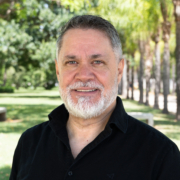
Angel Cantin Sanz was born in Valencia in 1971. He obtained the Bachelor’s Degree in Chemistry in 1994 at the Valencia University. After, he made a Master’s Degree at the Organic Chemistry Department of the same University supervised by Prof. Antonio Abad. In 1995, he joined the Institute of Chemical Technology (ITQ), inside of the Agricultural Chemical Ecology group, where he carried out his Doctorate in Chemistry supervised by Professors Eduardo Primo-Yúfera and Miguel Angel Miranda. In this work different natural products previously isolated from Penicillium brevicompactum were synthesized as well as several analogs. All of them showed important biological activities against plagues. The Doctorate was finished in 1998 and he moved to Pisa University where he worked with Prof. Gianfranco Denti in supramolecular chemistry. In 2000, he went back to Primo-Yufera’s group during a two years period. Then, he moved to the Avelino Corma’s group inside of the same institution, where he got a permanent position as a technician in 2008. From 2017 he belongs to the scientific staff of ITQ as a Tenured Scientist of the Spanish National Research Council (CSIC).

At present, his main research lines includes synthesis and characterization of new organic structure directing agents which provide new porous materials; as well as their utility in different catalytic process.

He has participated in several research projects financed by public institutions as well as private companies. He is co-autor of more tan 35 papers in high impact scientific journals and numerous presentations in congresses. Among his most relevant publications, papers published in Nature (2009) and Science (2010 and 2017) can be mentioned. Also, he is co-inventor of 12 patents related to the synthesis of new microporous materials and their application in different industrial processes. Some of these patents have been licensed to industries.

Chica Lara, Antonio

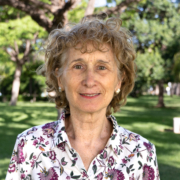
Antonio Chica Lara native from Fuensanta (Jaén), studied Chemistry at University of Granada (1987-1992) and received the Ph. D. “with honours” at the Chemical Department at the Universidad Politécnica de Valencia in 2008. From September 2002 to September 2004 he was working in U.C. Berkeley as Fulbright Fellowship Postdoc under the supervision of Prof. Enrique Iglesia. The development of new catalysts and processes for clean fuels production was the focus of his postdoctoral research. Recently he has got a permanent position in the Institute of Chemical Technology (ITQ) as Tenured Scientific of CSIC (Spanish National Research Council), where he is working on different projects related to hydrogen production from biomass derived compounds.

He has been involved in the study for novel catalyst isomerization of light and long paraffin and the details modeling of kinetic and transports processes in this reaction. He has also studied catalytic reforming, alkylation and cracking reactions. His last works include combinatorial catalysis, neuronal network and genetic algorithm applied to chemical reactions. He has collaborated with enterprises like UOP, EXXON-Mobil, IFP, ENI, BP-Amoco, Johnson Matthey PLC and CEPSA, and he has contributed with more than a thirty publications in international journals. He is also co-author of 17 world patents, two of them in industrial exploitation. He is member of SECAT (Spanish Catalysis Society), ACS (American Chemical Society), HeA (Hydrogen Spanish Society) and PEHPC (Hydrogen and Fuel Cell Spanish Platform).

Main research areas:
Hydrogen production from biomass derived compounds. Revalorization of industrial wastes. Sulfur removal from liquid fuels and natural gas. Development of catalytic materials and their application in reactions of industrial interest (isomerization, steam reforming, autothermal reforming, liquid phase reforming, water gas shift, methanation, desulfurization, etc)

He has been awarded with the Extraordinary UPV Thesis Award 2002 and the First Valencia Idea Award 2009 (Energy and Environment)

Climent Olmedo, Maria José

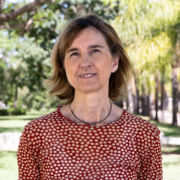
Maria José Climent Olmedo was born in Alginet (Spain).  Currently she is Full Professor at the Chemistry Department of the Technical University of Valencia (ETSII). She obtained her Ph. D. in 1991 at the University of Valencia working on the application of heterogeneous catalysts in organic synthesis. She teaches Chemistry at the Technical School of Industrial Engineers, and in the Master of Sustainable Chemistry and in the Master of Chemical Engineers in the subjects of Fine Chemistry and Biorefineries respectively. She is member of the Institute of Chemical Technology (ITQ) (UPV-CSIC) at the Technical University of Valencia since 1993, working in the group of Prof. Avelino Corma. Her research focuses on green chemistry, as well as the application of heterogeneous catalysts to the synthesis of fine chemicals and biomass transformation. In this area, she is author of more than 90 publications including articles, patents, conference proceedings and book chapters

Concepción Heydorn, Patricia

Patricia Concepción Heydorn, did her PhD work under the supervision of Prof. Jose Manuel López Nieto on the synthesis, characterization and catalytic properties of vanadium containing aluminophosphate catalysts (1992-1996) at the Institute of Chemical Technology (ITQ). Between 1997-1998 she has worked as a postdoc in the Fritz-Haber-Institut der Max Planck Geselschaft Berlin under the supervision of Prof.Karge, and between 1998-1999 in the Institut für Physikalische Chemie, LMU, München under the supervision of Prof. Knözinger. In 1999 she returned to the ITQ, Valencia, Spain, achieving a permanent position as Tenured Scientist of the Spanish National Research Council (CSIC) in 2002.

Her research area is focused on catalyst characterization under reaction conditions in order to develop structure-activity relationships. Systems of interest are supported metal nanoparticles, metal oxide catalyst and zeolites. The main spectroscopic tools used are infrared spectroscopy (IR), X-ray photoelectron spectroscopy (XPS) and Raman spectroscopy.

She is author of more than 40 publications and 3 patents on different aspects of inorganic, organic and material chemistry.

Corma, Avelino

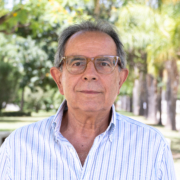
Avelino Corma (Moncofar, Castellón, Spain 1951), Professor at the Institute of Chemical Technology (ITQ-CSIC-Polytechnical University of Valencia), has been carrying out research in heterogeneous catalysis in academia and in collaboration with companies for nearly 30 years. He has worked on fundamental aspects of acid-base and redox catalysis with the aim of understanding the nature of the active sites and reaction mechanisms. With these bases has developed catalysts that are being used commercially in several industrial processes.
He is an internationally recognized expert in solid acid and bifunctional catalysts for oil refining, petrochemistry and chemical process, especially in the synthesis and application of zeolite catalysts.

He has published more than 1400 research papers, and is inventor on more than 200 patents. Over 20 of those patents have been applied industrially in commercial processes ofcracking, desulfuration, isomerization, epoxidation, chemo selective oxidation of alcohols and chemoselective hidrogenations. Corma earned his BS in Chemistry at Valencia University, PhD at Madrid under direction of Prof. Antonio Cortes, and spent two years postdoc at Queen´s University.

AWARDS:

– Heinz Heinemann Award of IACS – The International Association of Catalysis Societies (2020)
– Academic of Honor, Real Academia Canaria de Ciencias (2019)
– Blaise Pascal Medal for Chemistry, European Academy of Sciences (2018)
– The People’s Republic of China Friendship Award (2017)
– Spiers Memorial 2016/Royal Society of Chemistry (2016)
– 48th W. N. Lacey Lectureship  Caltech (2015)
– The Jacobus van´t Hoff Lecture 2015  TU Delft Process Technology Institute (2015)
– Hoyt C. Hottel Lecture, MIT (2015)
– Prince of Asturias Award for Technical & Scientific Research (2014)
– Honour Medal to the Invention from the Fundación García Cabrerizo (Spain) (2012)
– Grande Medaille de l´Académie des sciences (France), (2011)
– Scientific Merit of Generalitat Valenciana (2011)
– Gold of Medal for Chemistry Research Career 2001-2010 (2010)
– Eni Award (2010)
– Royal Society of Chemistry Centenary Prize (2010)
– Rhodia Pierre-Gilles de Gennes Prize for Science and Industry (2010)
– Bourdart Award in Advanced Catalysis (2009)
– A. V. Humboldt – J. C. Mutis Research Award (2009)
– Gabor A. Somorjai Award for Creative Research in Catalysis (2008)
– Karl-Ziegler-Lectureship Max Planck Society (2007)
– National Award on Science and Technology of México (2006)
– Alwin Mittasch of Dechema (2006)
– Paul Sabatier of the French Society of Chemistry (2006)
– Iberoamerican Fedaration of Catalysis Societies (FISOCAT) (2006)
– Cross Canada Lecture Award (2006)
– Gold of Medal of the Royal Society of Chemistry os Spain (2005)
– Breck Award of the International Zeolite Association (IZA) (2004)
– Medal of Honor of the García Cabrerizo Foundation (2004)
– The Order of Merit Civil of Spain (2002)
– Eugene J. Houdry Award in Applied Catalysis (2002)
– F. Gault European Award on “Catalysis” (2001)
– Ipatieff Actr at Nortwestern University (2000-2001)
– King Jaime I Award on “New Technologies” (Spain) (2000)
– Iberdrola Science and Technology (Spain) (1998)
– F. Ciapetta award of the North American Catalyst Society (1998)
– CATSA in recognition of research excellence “Dinstinguished Visitor Award of the Catalysis Society of South Africa” (1998)
– Burdiñola Award (Spain) (1997)
– Profesores Visitantes de Iberdrola (Spain) (1996)
– Dupont Award on “Materials Science” (Spain) (1995)
– National Award Leonardo Torres Quevedo (Spain) (1995)
– Dupont Award (Canada)

DOCTOR HONORIS CAUSA

– Universidad Nacional San Antonio Abad del Cusco, Perú (2019)
– University Paul Sabatier (2019)
– University of Córdoba (2018)
– University of Cantabria (2016)
– University of Jaen (2015)
– University of Bucharest (2014)
– University Delft University of Technology: TU Delft (2013)
– University of Ottawa (2012)
– Universidad de Alicante (2010)
– Universität Bochum (2010)
– Faculty of Chemistry and Biochemistry of the Ruhr-University Bochum (2010)
– Universidad de Valencia (2009)
– Universidad Jaime I (2008)
– Technische Universität München (2008)
– Universidad Nacional de Educación a Distancia (UNED) (2008)
– Utrecht University (2006)

PROFESSIONAL SOCIETIES AND ACTIVITIES

– PRESIDENT Comité Estratégico de Innovación (CEI) of the Valencian Innovation Agency (AVI) (2018)  PRESIDENT Comité Científico de la Agencia Estatal de Investigación (AEI) (2017)
– FOREIGN MEMBER of French Academy of Sciences (2016)
– Member of European Academy of Sciences (2018)
– PRESIDENT of the International Association of Catalysis Societies (2012)
– FOREIGN Member of the Royal Society (2012)
– Member of President´s International Advisory Council of King Abdullah University of Science KAUST (2011)
– Member of Royal Academy of Exact Sciences, Physics and Natural of Spain (2011)
– PRESIDENT of the European Association of Catalysis Societies. (2009-2013)
– Member of National Academy of Engineering NAE (USA) (2007)
– Member of Academia Europea, Chemical Science Section (1996)
– Member of Royal Academy of Engineering of Spain (1994)

MEMBER OF EDITORIAL ADVISORY BOARD

– Angewandte Chemie (2014 – Currently)
– ChemSusChem (2012 – Currently)
– Green Chemistry (2010- Currently)
– Catalysis Letters (2012-Currently)
– ChemCatChem (2012- Currently)
– Topics in Catalysis (2010- Currently)
– Physical Chemistry Chemical Physics (1997- Currently)
– Journal of Catalysis (1999- Currently)
– Dalton Transaction (2000-2010)-
– Journal of Catalysis (1999- Currently)
– Catalysis Sciences, Technology, and Innovation (1997-1998)
– Chemical Communications (1997-2000)
– Catalysis Technology (1996-Currently)
– Japanese Catalysis Surveys (1996 – Currently)
– J. Molecular Catalysis (1995 – Currently)
– Catalysis Letters (1994- Currently)
– Catalysis Review S.C. and Eng. (1992- Currently)
– Microporous and Mesoporous Materials (1991- Currently)
– Applied Catálisis (1988-1992)

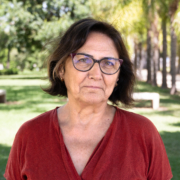
Díaz Cabañas, Mª José

Dr. Maria Jose Díaz Cabañas studied Chemistry in the University of Valencia and, after some years working in the industry, she received his Ph.D. from the Universitat Politècnica de València (1999). She got a postdoctoral fellowship from Iberdrola (1999-2000) in the Institute of Chemical Technology (ITQ) with Professor Avelino Corma and later she continues working in the ITQ until 2003 when she reached a permanent position in the Spanish National Research Council (CSIC). Since 2007 she works as Research Scientist in CSIC.

Her research is focused in chemistry in the area of synthesis of microporous materials as catalysts important to industry to develop new products and to improve oil refining. Her work includes the synthesis and characterization of microporous materials, mainly zeolites. Besides to participate in several projects, she has worked in collaboration with companies as ExxonMobil, BASF, TOTAL, IFP, Albemarle Catalysts and TOPSOE.
Her main working areas are:

– Synthesis and characterization of new microporous materials
– Development of High-Throughput techniques applied to the synthesis of zeolites
– Synthesis of microporous materials at room temperature in biomimetic conditions.

She has published 70 papers mainly in Journals of high impact factor, among whom stands out 3 papers in Nature and 1 in Science. Besides she is coauthor of 28 worldwide patents, some of them transferred to companies.

She is member of the Spanish Society of Catalysis (SECAT) and the American Chemical Society (ACS).

Díaz Morales, Urbano M.

“Dr. Urbano Díaz is a CSIC Research Scientist at the Chemical Technology Institute (ITQ) since 2004. Born in Valencia (1974), he studied chemistry at the University of Valencia, Spain, obtaining his doctorate in 2002 in synthesis and characterization of new zeolites delaminated. He subsequently obtained a Marie Curie European Postdoctoral Fellowship at the EniTecnologie Center (Eni SpA) in Milan, Italy, on the catalytic applications of porous organic-inorganic hybrid materials from functional silsesquioxanes. In 2004, he returned to ITQ where he has worked in the field of multi-core hybrid materials, layered solids, nanocomposites and biomaterials with a particular focus on the effective combination between organic and inorganic structural components. U. Díaz is the author of more than 85 articles and 13 application patents on different aspects of inorganic, organic and materials chemistry, compiling around 1800 citations (index h 24), being Principal Investigator and Coordinator in regional, national and  Europeans projects. In 2010 he was awarded the VI Idea Prize in Technology from the Generalitat Valenciana.”

Domine, Marcelo Eduardo

Marcelo E. Domine was born in Córdoba, Argentine in 1969. He obtained his Bachelor (1992) and Master (1996) degrees in Chemistry from the National University of Córdoba (Argentine). He completed his PhD at the Universitat Politècnica de València (Spain) in 2003 under the guidance of Prof. A. Corma. Then, he carried out postdoctoral research at the Institute of Chemical Technology of Valencia (UPV-CSIC, Spain 2004-05), and at the Institute des Recherches sur la Catalyse et l’Environnement de Lyon (IRCELYON-CNRS, France 2005-07). In 2008, he re-joined Prof. A. Corma’s group as a Ramon y Cajal Program reintegrated researcher of CSIC. Since 2009, he has developed his work as Tenured Scientist of CSIC at the Institute of Chemical Technology.

His main research lines involve the synthesis and characterization of nano-structured materials based on supported metals and metallic mixed oxides, and their application as heterogeneous catalysts in acid–base and redox reactions, mainly focusing on the development of novel and sustainable chemical processes, such as the new biomass-derivatives transformations into valuable chemical products. In the last 7-8 years, M.E. Domine has consolidated his research group mainly working on novel catalysts and catalytic processes for the valorization of biomass and its derivatives, as well as other residues (i.e. municipal wastes, plastic wastes, etc.) for obtaining advanced bio-fuels and high-added value bio-chemicals).

M.E. Domine is co-author of more than 65 scientific articles published in high-cited index journals and of 30 patent applications. He has presented his work in more than 80 congresses (nationals and internationals) and has given 25 invited conferences. He has participated in 37 public funded projects being the principal researcher of 17 of them. Remarkably, one important part of his research work is centred in the development of catalytic processes with industrial application in collaboration with chemical, petro-chemical and bio-refining companies, participating in 26 contracts with industry and applying numerous patents (>10 in the last 7-8 years).

Marcelo E. Domine has been awarded with the “SECAT-Tesis Doctoral 2003”, SECAT, Madrid, Spain (2003), the “Estímulo a la Labor Universitaria 1995”, Córdoba, Argentine (1995).

Participation in Editorial Committees as Reviewer of more than 50 Scientific Journals, such as: RSC Advances, Green Chemistry, Chemical Communications, Angewandte Chemie Int.  Ed., ChemSusChem, Chemistry: A European Journal, ACS Sustainable Chemistry & Engineering, ACS Catalysis, Journal of Catalysis, Catalysis Letters, Applied Catalysis A: Gral., Applied Catalysis B: Environ., Catalysis Today, Catalysis Communications, Catalysis Science & Technology, Chemistry of Materials, Fuels Processing Technology, Energy & Fuels, Waste & Biomass Valorization, among others. He is also member of the Editorail Board of Current Catalysis journal and has participated as Managing Guest Editor of Catalysis Today (2013-2015) and Nanomaterials journals.

He is Official Evaluator of ANEP (since 2009), external evaluator of research projects of the Junta de Andalucía and of PICT projects from Argentina (since 2012), as well as member of the evaluation committees of Marie Curie Fellowships – EU Program (2014 and 2015), among others. Since 2015 he is the CSIC representative at the EERA Program (JP-Bioenergy) and the UPV representative at the CBE JP platform, both of the EU.

Escolástico Rozalen, Sonia

Sonia Escolástico es Científica Titular del CSIC en el Instituto de Tecnología Química, donde investiga en conversión y almacenamiento de energía, intensificación de procesos y sistemas electroquímicos integrados con reacciones químicas. Su trabajo se centra en materiales, membranas y reactores electroquímicos para producción y separación de hidrógeno, valorización de CO₂ y otras aplicaciones energéticas sostenibles. Ingeniera química y doctora por la Universitat Politècnica de València, realizó su etapa postdoctoral en el Karlsruhe Institute of Technology. Su investigación contribuye al desarrollo de tecnologías sostenibles para la descarbonización y electrificación de procesos químicos.


Feliz Rodríguez, Marta

Marta Feliz Rodríguez was born in Castellón de la Plana (1976) and obtained her Bachelor in Chemistry at the Universitat Jaume I in Castellón (Spain). She did her PhD at Universitat Jaume I (1998-2003) directed by Profs. Rosa Llusar and Santiago Uriel on the development of cubane-type molybdenum and tungsten chalcogenide cluster complexes, with potential applications in catalysis and as optical limiters. During her post-doc, M. Feliz got expertise in reaction mechanism studies catalyzed by transition metal organometallic complexes by means of computational methods like DFT and QM/MM. In a first period (2004-2005), she carried out her research at the groups directed by Prof. Feliu Maseras and Prof. Carles Bo at the Institut Català d’Investigació Química in Tarragona (Spain). Afterwards, she moved to the group leaded by Profs. Odile Eisenstein and Eric Clot at the Institut Charles Gerhardt in Montpellier (France), where she worked for two years. In 2007, Dr. Feliz joined the Molecular Materials group directed by Prof. Llusar at the Universitat Jaume I, where she carried out combined theoretical and experimental catalytic studies with transition metal cluster complexes. After being promoted to Tenured Scientist at the Spanish National Research Council (CSIC) in 2009, she joined the Institute of Chemical Technology (UPV-CSIC) in Valencia (Spain), where she works at the moment.

During her pre- and post-doctoral period, Dr. Feliz has collaborated in teaching courses at the Universitat Jaume I and Universitat Rovira I Virgili in Tarragona, where has been associated professor. Nowadays, she participates in two official master courses which belong to the Universitat Politècnica de Valencia and to the Universitat Jaume I, respectively.

At present, the principal research lines of Marta Feliz are focused on the development on coordination complexes and organic-inorganic hybrid materials based on transition metals with potential catalytic applications, and combined experimental and theoretical studies of reaction mechanisms.