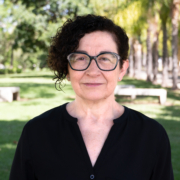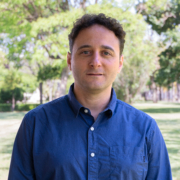
Sabater Picot, Ma. José

Maria José Sabater is currently a scientific researcher at the Institute of Chemical Technology (UPV-CSIC), Valencia (Spain). She obtained her MSci and PhD degree in Organic Chemistry at the Universidad de Valencia (Spain). After completing her doctorate, she joined the group of Prof. Waldemar Adam at the Würzburg University (Germany) as a post doctoral fellow of the Alexander von Humboldt Foundation, conducting photochemistry in confined spaces (1993-1994). Thereafter she moved to Poitiers University (France), with a post-doc fellowship from the European Union´s Human Capital and Mobility Program to join one of the world leaders in catalysis, Prof. Michel Guisnet (1995). Her research was focused on heterogeneous catalysis for fine chemicals.

In early 1996, she was awarded with a very competitive individual contract for research (Program for the Incorporation of Researchers and Technologists from the Ministry of Education and Science), which is a tenure track position (5 years) within the spanish research system. In 2002 she got a permanent position as scientific researcher at the Institute of Chemical Technology (UPV-CSIC). Since then she has adressed the discovery and design of novel multifunctional nanostructured solids for application as catalysts in fine chemical, pharmaceutical and environmental technologies. She is author of publications (including articles, conference proceedings and book chapters) on carbocationic chemistry, photochemistry, new materials and catalysis. On the applied side, she holds several international and national patents and licensed technologies.

Her current research interests include nanocatalysis and new materials.

Sastre Navarro, Germán

1985-1990, Degree of Chemistry, Department of Physical-Chemistry, Faculty of Chemistry (University of Valencia). Physical and Quantum Chemistry.
1995, PhD Chemistry (University of Valencia). Quantum-chemical studies of xylene isomerisation in zeolites (supervisor: Prof. Avelino Corma).
1995-1996, Postdoc Computational Chemistry, Davy-Faraday Research Laboratory, London (U.K.). Physico-chemical properties of zeolites and silico-alumino-phosphates, and diffusion of hydrocarbons in zeolites (supervisor: Prof. Richard Catlow).
2000-current, Staff Research Member (Research Scientist), Institute of Chemical Technology (ITQ).
Visiting researcher at: University College London, 1999, London (U.K.) (host professor: Dewi W. Lewis); Imperial College of Science, 2002, London (U.K.) (host professor: Julian D. Gale); Nanochemistry Research Institute, 2004, Perth (Australia) (host professor: Julian D. Gale); Department of Materials Science, Tottori University, 2007, 2008 and 2010, Tottori (Japan) (host professor: Miki Niwa).

Main Research Topics:
Computational methods: molecular mechanics, molecular dynamics, atomistic forcefields, quantum chemistry, ab-initio methods, density functional theory.
Theory: chemical bonding in microporous materials, electric field in micropores, topology of three dimensional tetracoordinated nets.
Materials: solid state chemistry, zeolites, zeotypes, doped zeotypes, microporous materials, mesoporous materials, proton sponges, fullerenes, metal-organic frameworks (MOFs), coordination polymers, organometallic complexes.
Processes: reactivity in zeolites as catalysts (alkylation, acylation, isodewaxing, Knoevenagel condensation, Baeyer-Villiger oxidation), diffusion of hydrocarbons in zeolites, shape-selectivity, acidity (Brønsted and Lewis) in microporous materials, isomorphic substitution in zeolites (Ti, Ge, Sn, Al, P), synthesis of zeolites (effect of templates, synthesis in fluoride media, effect of germanium), physisorption of molecular hydrogen in metal-organic frameworks (hydrogen storage), excited states of organometallic complexes.

More information:

https://gsastre.webs.upv.es

Serra Alfaro, José Manuel

Prof. José M. Serra (Valencia, 1976) completed his doctoral dissertation at the ITQ under the supervision of Prof. A. Corma, in collaboration with the Institut Français du Pétrole. The dissertation focused on the development of new tools for combinatorial catalysis and their application in the design and optimization of new industrial catalysts. He completed a two-year postdoctoral fellowship at Forschungszentrum Jülich in Germany, working on the development of nanostructured SOFC cathodes as well as ion-conducting membranes. In 2006, he returned to the ITQ, where he currently heads the research line on fuel cells and ion-conducting membranes, leading the ITQ’s Energy Conversion and Storage Group. His scientific work focuses primarily on the application of catalysis and materials science to: a) the development of components for solid oxide fuel cells/electrolyzers, with special attention to the design and characterization of new electrocatalysts; and b) the development of mixed-ion-electron-conducting membranes for the separation of oxygen and hydrogen and for their application in membrane catalytic reactors. As a result of his work, Jose M. Serra is the co-author of more than 190 articles, 18 book chapters, and 27 patents in the field of catalysis and energy. Prof. Serra is the CSIC representative in the European Energy Research Alliance (EERA): Basic Science for Energy Joint Programme (AMPEA). He coordinated the CSIC’s White Paper on “Clean, Safe, and Efficient Energy.”

Website: http://itqmembranes.itq.webs.upv.es


Valencia Valencia, Susana

A CSIC research scientist at the ITQ, she earned her bachelor’s degree in chemistry from the University of Valencia (1990) and her Ph.D. from the UPV in 1997. Her research focuses on the synthesis, characterization, and catalytic applications of zeolites, as well as on the study of their adsorption properties for use in separation processes.
She has published more than 120 articles (Scopus publications) and is a co-inventor on 30 patents. She has been teaching since 2006 in the Master’s Program in Sustainable Chemistry at the UPV and has served on the ITQ Equality Committee (2019–2022) and on the boards of directors of the Spanish Zeolite Group (2009–2017) and the Specialized Adsorption Group (2022–).