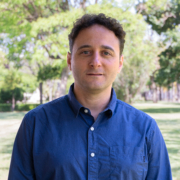
Martínez Feliu, Agustín

Address: Instituto de Tecnología Química (ITQ)
Avenida de los Naranjos s/n
46022 Valencia, Spain

E-mail: amart@itq.upv.es
Phone: (+34) 963 877 808
ORCID: 0000-0002-9974-1567
Researcher ID: D-2644-2012


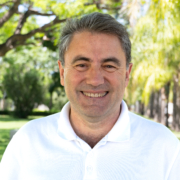
Agustín Martínez was born in Alzira (Valencia, Spain) in 1961 and received the degree in Chemistry at the University of Valencia in 1984. His Ph.D. studies were performed at the Instituto de Catálisis y Petroleoquímica (ICP-CSIC) in Madrid under the guidance of Prof. Avelino Corma in the subject of zeolite catalysts for catalytic cracking. He received the Ph.D. degree in 1990. During the period of 1988-1990 he was working at the R&D Centre of the refining company CEPSA in Madrid. In 1991, he got a permanent position at the ITQ and in 2009 was promoted to full Research Professor at CSIC.

His researches mainly dealt with the development of more efficient and environmentally friendly heterogeneous catalysts for producing fine chemicals, petrochemicals, and clean fuels. Currently, his research interests are mostly focused on developing and gaining fundamental understanding on catalysts for the valorization of C1 molecules, including the direct conversion of natural gas (methane), synthesis gas (Fischer-Tropsch synthesis, DME synthesis, C2+ oxygenates), and CO2 to value-added chemicals and synthetic fuels.

Agustín Martínez has led several national and UE projects and has participated in different R&D contracts with major chemical-refining companies, among which Repsol (Spain), Eni (Italy), IFP (France), Rhodia (France), Conoco-Philips (USA), Lurgi (Germany), Petrobras (Brasil), Abengoa Biotechnology (Spain), Novargi (Spain), and Sener (Spain) are worth to be mentioned. He is co-author of about 120 articles published in peer-reviewed international scientific journals and more than 10 chapters in scientific books and encyclopedias. His publications have received near 9.000 citations, with an h-index of 51 (Scopus source). He is also co-inventor of 12 issued patents and presented more than 120 contributions in national and international congresses and meetings, including several Plenary Lectures and Keynotes.

Currently, he is member of the Catalysis Committee of the International Zeolite Association (IZA) and is one of the two delegates of the Spanish Catalysis Society in the International Association of Catalysis Societies (IACS).
In 2000, Agustín Martínez was awarded the National CSIC-Volkswagen Prize for Young Researchers (under 40) by his outstanding contributions in the field of environmentally friendly transportation fuels.


List of 15 most relevant scientific contributions (from newest to oldest)

  1. S. Escorihuela, F. Toldra-Raig, S. Escolástico, R. Murciano, A. Martínez, J.M. Serra, Copper Surface-alloying of H2-permeable Pd-based membrane for integration in Fischer-Tropsch synthesis reactors, Journal of Membrane Science 619 (2021) 118516.
  2. F. Bertella, C.W. Lopes, A.C. Foucher, G. Agostini, P. Concepción, E.A. Stach, A. Martínez, Insights into the promotion with Ru of Co/TiO2 Fischer-Tropsch catalysts: An in situ spectroscopic study, ACS Catalysis 10 (2020) 6042-6057.
  3. S. Mohammadnasabomran, A. Tavsoli, Y. Zamani, C. Márquez-Álvarez, J. Pérez-Pariente, A. Martínez, Influence of amines in the synthesis of mesotructured aluminas and assessment as supports for Co-based Fischer-Tropsch synthesis catalysts, Fuel Processing Technology 205 (2020) 106433.
  4. M. Shamzhy, M. Opanasenko, P. Concepción, A. Martínez, New trends in tailoring active sites in zeolite-based catalysts, Chemical Society Reviews 40 (2019) 1095-1149.
  5. G.M. Cabello González, R. Murciano, A.L. Villanueva Perales, A. Martínez, F. Vidal-Barrero, M. Campoy, Ethanol conversion into 1,3-butadiene over a mixed Hf-Zn catalyst. Effect of reaction conditions and wáter content in ethanol, Fuel Processing Technology 193 (2019) 263-272.
  6. S. Moussa, P. Concepción, M.A. Arribas, A. Martínez, Nature of Active Nickel Sites and Initiation Mechanism for Ethylene Oligomerization on Heterogeneous Ni-beta Catalysts, ACS Catalysis 8 (2018) 3903-3912.
  7. S.H. Morejudo, R. Zanón, S. Escolástico, I. Yuste-Tirados, H. Malerød-Fjeld, P.K. Vestre, W.G. Coors, A. Martínez, T. Norby, J.M. Serra, C. Kjølseth, Direct conversion of methane to aromatics in a catalytic co-ionic membrane reactor, Science 353 (2016) 563-566.
  8. S. Moussa, M.A. Arribas, P. Concepción, A. Martínez, Heterogeneous oligomerization of ethylene to liquids on bifunctional Ni-based catalysts: The influence of support properties on nickel speciation and catalytic performance, Catalysis Today 277 (2016) 78-88.
  9. A. Martínez, M.A. Arribas, S.B.C. Pergher, Bifunctional noble metal/zeolite catalysts for upgrading low-quality diesel fractions via selective opening of naphthenic rings, Catalysis Science and Technology 6 (2016) 2528-2542.
  10. G. Prieto, M.I.S. De Mello, P. Concepción, R. Murciano, S.B.C. Pergher, A. Martínez, Cobalt-catalyzed Fischer-Tropsch synthesis: Chemical nature of the oxide support as a performance descriptor, ACS Catalysis 5 (2015) 3323-3335.
  11. A. García-Trenco, A. Martínez, Direct synthesis of DME from syngas on hybrid CuZnAl/ZSM-5 catalysts: New insights into the role of zeolite acidity, Applied Catalysis A: General 411 (2012) 170-179.
  12. G. Prieto, A. Martínez, P. Concepción, R. Moreno-Tost, Cobalt particle size effects in Fischer-Tropsch synthesis: Structural and in situ spectroscopic characterization on reverse micellar-synthesized Co/ITQ-2 model catalysts, Journal of Catalysis 266 (2009) 129-144.
  13. A. Martínez, C. López, F. Márquez, I. Díaz, Fischer-Tropsch Synthesis of Hydrocarbons over Mesoporous Co/SBA-15 Catalysts: The Influence of Metal Loading, Cobalt Precursor, and Promoters, Journal of Catalysis 220 (2003) 486-499.
  14. A. Corma, A. Martínez, V. Martínez-Soria, J.B. Montón, Hydrocracking of Vacuum Gas-Oil on the Novel Mesoporous MCM-41 Aluminosilicate Catalyst, Journal of Catalysis 153 (1995) 25-31.
  15. A. Corma, A. Martínez, Chemistry, Catalysts and Processes for Isoparaffin-Olefin Alkylation: Actual Situation and Future Trends, Catalysis Reviews – Science & Engineering 35 (1993) 483-570.


Competitive R&D Projects (last 10 years)

National

2019-2022. Conversión directa de CO2 en portadores de energía química utilizando reactores electrocatalíticos de membrana. CICYT (TRI2018-102161-B-I00).

2015-2018. Almacenamiento de energía vía reducción de CO2 a combustibles y productos químicos. CICYT (ENE2014-57651-R).

2011-2013. Catalizadores avanzados para la conversión de gas de síntesis en combustibles. CICYT (CTQ2010-17988).


International

2021-2025. Project CO2SMOS (European Union). Advanced chemicals production from biogenic CO2 emissions for circular bio-based industries.

2019-2022. Project eCOCO2 (European Union). Direct electrocatalytic conversion of CO2 into chemical energy carriers in a co-ionic membrane reactor.

2014-2017. Project ELECTRA (European Union). High temperature electrolyser with novel proton ceramic tubular modules of superior efficiency, robustness, and lifetime economy.

2009-2014. Project OCMOL (European Union). Oxidative coupling of methane followed by oligomerization to liquids.

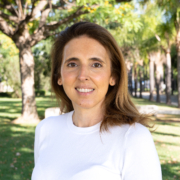
Martínez Sánchez, Cristina

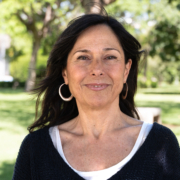
Cristina Martínez Sánchez es licenciada en Ciencias Químicas por la Universidad de Valencia (1991) y doctora en Química por la Universidad Politécnica de Valencia (1996). Tras una estancia en el Institüt für Technische Chemie de la Universidad de Leipzig se reincorporó al Instituto de Tecnología Química, CSIC-UPV (ITQ). En 2006 es nombrada Científico Titular del CSIC en este mismo centro y en 2025 promociona a Investigadora Científica.

Cuenta con una trayectoria consolidada en catálisis heterogénea y en la optimización de materiales avanzados para procesos industriales, con especial foco en sostenibilidad y transición energética.
Desde octubre de 2024 es vice-directora científica del ITQ.

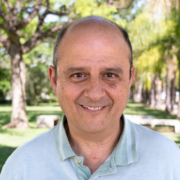
Martínez Triguero, Joaquín

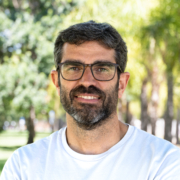
Dr. Joaquín Martínez es Dr. Ingeniero Industrial por la UPV. Fue becario del Dpto. de Ingeniería Mecánica (1992-1995) y realizó su tesis doctoral bajo la supervisión del Prof. Avelino Corma en el ITQ. Titulado Superior en el ITQ (1995-2004) y actualmente Científico Titular del CSIC.

Desarrolla su investigación en procesos y catalizadores para la obtención de olefinas y aromáticos a partir de materias renovables como metanol, dióxido de carbono, biomasa o residuos, con el objetivo de contribuir a la descarbonización de la industria del refino y petroquímica y la eliminación de contaminantes en emisiones industriales.

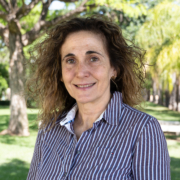
Moliner Marín, Manuel

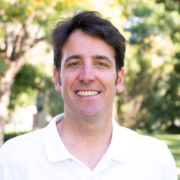
Manuel Moliner es Profesor en el ITQ. Obtuvo su doctorado en Química por la UPV en 2008 bajo la dirección de Avelino Corma y realizó una estancia posdoctoral en Caltech (2008-2010) con Mark Davis. Su investigación se centra en la catálisis heterogénea y el diseño de materiales, desarrollando catalizadores eficientes para procesos industriales y sostenibles.

Ha publicado más de 130 artículos (>14.000 citas) y es coautor de 36 patentes, varias transferidas a la industria. Ha recibido premios internacionales como el Young Research Award de la IZA y actualmente desempeña funciones como secretario del GEZ y de la IZA.

Oña Burgos, Pascual

I studied Chemistry at UAL (Spain), where I have earned my PhD (December 2008). Afterwards, I expanded my horizons through three postdoctoral research opportunities:
a) Firstly, I spent 7 months in the industry working at Deretil’s in the department of research and development.
b) Secondly, I worked for 2 years and 7 months in the research group of Prof. Frank Breher at the KIT, where I was supported by a fellowship from the Alexander von Humboldt Foundation.
c) Finally, I was at UC Berkeley with Prof. Don Tilley supported by an International Outgoing Fellowship of the Marie Curie Actions.
Afterwards, I moved as Ramón y Cajal researcher at ITQ in Valencia. Currently, I am Research at ITQ.

Prieto, Gonzalo

Prieto dirige el grupo “Ingeniería de Catálisis para Sostenibilidad”, centrado en el desarrollo de catalizadores y procesos para la producción sostenible de químicos “commodity” y combustibles desde recursos renovables (C1 (CO₂, (bio)syngas), N1), integrando ciencia de materiales, tomografía y espectroscopias avanzadas, e ingeniería química.

Con 9 años de experiencia internacional (PDR en Utrecht Univ. (NL); Group Leader en Max Planck Institut KOFO (DE)), Prieto ha sido/es IP/coord. de 8 proyectos europeos, y 2 prestigiosas becas ERC. Es autor de aprox. 70 publicaciones científicas, inventor de 15 patentes (8 transferidas a la industria) y co-fundador y CSO de la spin-off deeptech Olesym SL.

Primo, Ana

La Dra. Ana Primo es Científica Titular (CSIC) desde 2021 y actualmente dirige el Grupo de Investigación “HG energy”. Su investigación se centra en el diseño, síntesis y caracterización avanzada de materiales bidimensionales, entre ellos grafeno, nitruro de boro y MXenes, para su aplicación como catalizadores térmicos, electroquímicos y fotocatalíticos en transformaciones químicas sostenibles y procesos relacionados con la energía.

Ha liderado tres proyectos consecutivos financiados por el Ministerio de Ciencia e Innovación. Más recientemente, su grupo fue reconocido como Grupo de Excelencia dentro del programa PROMETEO de la Generalitat Valenciana, donde ejerce como investigadora principal.

Rey, Fernando

Profesor de Investigación del CSIC en el ITQ, se licenció en Química por la Universidad Autónoma de Madrid (1986) y se doctoró por la misma universidad en 1992. Su investigación se centra en la síntesis y caracterización de zeolitas y sus aplicaciones como adsorbentes selectivos en procesos de separación.

Ha publicado más de 200 artículos y es coinventor de más de 45 patentes. Desde 2006 participa en el Máster en Química Sostenible de la UPV y ha dirigido 12 tesis doctorales. Forma parte de la Comisión de síntesis de zeolitas de la Asociación Internacional de Zeolitas (IZA). Recibió el Premio de ‘La Vanguardia de la Ciencia’ en el año 2011. Fue director del ITQ entre los años 2014 a 2022.

Sabater Picot, Ma. José

Maria José Sabater obtuvo su doctorado por la Univ. Valencia. Posteriormente se trasladó a la Univ. Würzburg (Alemania) con una beca de la Fundación Alexander von Humboldt, enlazando con una segunda estancia postdoctoral en la Univ. Poitiers (Francia) con un contrato del Programa Capital Humano y Movilidad (UE).

A continuación, obtuvo un Contrato de Reincorporación de Investigadores (MINCYT) en el ITQ incorporándose como investigador de plantilla en 2002. Sus áreas de interés se centran en el diseño de materiales para tecnologías de sensado y catalizadores para la obtención de productos químicos, vectores energéticos, valorización de residuos, y reciclado químico.

Sastre Navarro, Germán

German Sastre (https://gsastre.webs.upv.es, PhD Chemistry 1995)
His scientific background includes physical chemistry, catalysis, computational chemistry (molecular dynamics, atomistic forcefields, and density functional theory), programming languajes, operating systems, and parallel computing.

Most of his papers deal with zeolites and metal-organic frameworks, but also he is interested in soft-matter (proteins), ligand-receptor interactions, and chiral molecules.

He is member of the Structure Commission of the International Zeolite Association, Associate Editor of Physical Chemistry Chemical Physics, and serves in a large number of scientfic panels of project evaluation across the world.