The registration period for the Máster en Química Sostenible del ITQ (UPV-CSIC) is open

Interested may register until June 30, 2023

The enrollment period for the Master’s Degree in Sustainable Chemistry for the 2023/2024 academic year is officially open. Interested persons may register from June 15 to 30, 2023.

The Master’s in Sustainable Chemistry’s main objective is to train students capable of developing new efficient, economically viable, and environmentally friendly chemical processes. This approach allows minimizing the consumption of energy and raw materials, as well as reducing the risks associated with the production, handling and use of chemical products in our current way of life.

The Master is considered a national benchmark in the fields of Sustainable Chemistry and Catalysis. In it, students will have the opportunity to receive comprehensive and up-to-date training in these areas, by internationally renowned teaching and research staff.

The Master’s Degree in Sustainable Chemistry offers a rigorous and specialized curriculum, with a combination of theoretical and practical subjects that provide the necessary tools to face the current challenges in the field of sustainable chemistry. In addition, participation in research projects is encouraged, which allows students to gain practical experience and be at the forefront of innovation in this discipline.

People interested in enrolling in the ITQ Master in Sustainable Chemistry must complete the enrollment process before June 30, 2023.

For more information:

Antonio Eduardo Palomares Gimeno

apalomar@iqn.upv.es


The Instituto de Tecnología Química (UPV-CSIC) has been selected to participate in the “First professional experience program in public administrations” (PEX2023)

The Instituto de Tecnología Química (UPV – CSIC) has been selected to participate in the “First professional experience program in public administrations” (PEX2023), financed by the European Union through the “Next Generation EU” program of the Ministry of Labor and Social Economy.

This program aims to provide young professionals with the opportunity to gain work experience in the field of public administration

More information


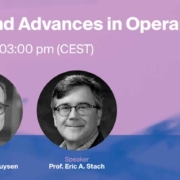
Nanomaterials Webinar | Trends and Advances in Operando Spectroscopy, 12 Junio 2023

This webinar delves into the fascinating world of operando spectroscopy, giving “in vivo” information about catalysts under working conditions. A fundamental understanding of catalyst behavior is an important aspect of energetic transition, allowing for the development of more sustainable processes. This webinar is ideal for academics and industry professionals interested in the latest trends in spectroscopy and material science.

More information:

https://www.mdpi.com/about/announcements/5850

Registration:

https://us02web.zoom.us/webinar/register/4016848925771/WN_7J_7uqYWSP-PtKhnTTj8bA

ITQ UPV-CSIC) researchers coordinate the Horizon Europe project E-TANDEM

ITQ UPV-CSIC) researchers coordinate the Horizon Europe project E-TANDEM which aims to demonstrate innovative e-fuel formulations and production concepts to de-fossilize the heavy-duty and marine transport sectors.

ITQ UPV-CSIC) coordinates the E-TANDEM EU R&D effort on synthetic fuels production.

ITQ UPV-CSIC) researchers, in cooperation with other academic institutions, The Max Planck Society (Germany), Technical University of Denmark (Denmark), University of Zagreb (Croatia), University of Cape Town (South Africa), King Abdullah University of Science and Technology (Saudi Arabia), as well as specialized technology centers and companies OWI Science for Fuels GmbH (Germany), Tech4Fuels GmbH (Germany), Uniresearch BV (The Netherlands), AVL LIST GmbH (Austria), and Goodfuels BV (The Netherlands), take part in the Horizon Europe research and innovation action  E-TANDEM.

The EU target for 2050 to achieve a net-zero greenhouse gas (GHG) emissions economy is crucial to cease global warming and its consequences on climate, and transport is a key sector to defossilize. While electrification is the blueprint for passenger vehicles, the de-fossilization of other hard-to-abate transport sectors such as heavy-duty long-haul ground, shipping and aviation transport relies on the availability of higher-energy-density and carbon-neutral fuels. Mid- and long-chain (C5+) oxygenated hydrocarbon compounds could prove a highly promising alternative, due to their high energy density, capacity to reduce tailpipe soot emissions, their advantageous logistics and their compatibility with current-fleet infrastructures (unlike lighter oxygenate compounds such as methanol or DME). These features could enable their swifter application “drop-in”, replacing fossil diesel fuels already in the current fleet of heavy-duty trucks and ships, without imposing modifications or engine redesigns. However, at present there are no efficient production concepts for such higher oxygenate e-fuels directly from renewable, carbon neutral resources.

The E-TANDEM R&D effort brings together 11 partners from 8 countries in the EU and overseas to unlock an efficient and direct production of a new higher-oxygenate diesel-like e-fuel (HOEF). According to the project’s vision, said oxygenated fuel is directly produced from CO2 as the sole carbon source and renewable power as the sole energy input, in a once-through catalytic process which integrates three major catalysis branches: electrocatalysis, heterogeneous catalysis and molecular catalysis.

“The new e-fuel formulation and the innovative production concept builds on recent lab-scale discoveries and Intellectual Property Rights generated by our research team in cooperation with project partners at the Max Planck Institute for Chemical Energy Conversion (PD. Vorholt, Prof. Leitner), in Germany. It relies on our ability to engineer different families of catalyst materials, which have traditionally been regarded as mutually excluding, to now cooperate in “tandem”. It is only through this catalyst cooperation which we are now in the position to achieve the conversion of renewable carbon sources to a set of oxygenated fuel compounds with efficiencies which had long remained an intractable challenge for scientists” indicates Gonzalo Prieto, head of the CSIC research group Catalysis engineering and small molecule valorization at ITQ, and coordinator of this international R&D effort. “Through its Green Deal program, the EU has firmly indicated the way to lead the energy transition which we face globally. It is through collaborative, international, and multidisciplinary R&D efforts like E-TANDEM which we, researchers, can train the next generation of young professionals and test those disruptive concepts which are deemed to make the transition happen in the coming years.”

Photo: Group picture taken at the recent General Assembly meeting of the E-TANDEM research team at the premises of ITQ (UPV-CSIC) in Valencia.

More information on the project as well as updates on developments and events at the project’s website: https://www.e-tandem.eu/. Follow also the project’s profile in LinkedIn for regular updates on technical developments and job opportunities.

Contact person: Dr. Gonzalo Prieto (prieto@itq.upv.es).

Computational Chemistry Seminar at ITQ (UPV-CSIC) on the CHARMM Software given by developer Wonpil Im on Thursday, June 15th

El Instituto de Tecnología Química (UPV-CSIC) invites you to the Computational Chemistry Seminar, which will take place next Thursday, June 15th at 17:00 in the Auditorium located on the ground floor of the ITQ facilities.

This event will feature the presence of Wonpil Im, a renowned developer of the CHARMM Software (Chemistry at HARvard Macromolecular Mechanics). The seminar aims to present and explore the features and applications of this cutting-edge software.

CHARMM is widely used in the scientific community for the study of molecular and macromolecular systems. The program provides advanced modeling and simulation tools, allowing researchers to conduct investigations in diverse fields such as structural biology, pharmaceutical chemistry, and theoretical chemistry.

During the seminar, Dr. Wonpil Im will share his experience as a developer of CHARMM and discuss the latest updates and improvements of the program. Additionally, practical examples and live demonstrations will be presented to illustrate how CHARMM can be used to address state-of-the-art scientific problems.

For those interested in attending the event, a detailed summary of the seminar’s content is attached and can be found at the following link: https://www.charmm.org. This seminar is a unique opportunity for researchers, students, and professionals in the field of computational chemistry to acquire knowledge and learn from one of the leading experts in the development of CHARMM.

ITQ invites all interested individuals to participate in this event. Pre-registration is not required, but it is recommended to arrive early to secure a spot. Don’t miss this opportunity to expand your knowledge in Computational Chemistry with CHARMM!

“Access until full capacity is reached”

More information: gsastre@itq.upv.es


CANCELED / ITQ Lectures: “Pushing the Limits of Electron Microscopy: Unveiling Nanomaterials at Sub-Angstrom Scale” by Prof. J. Carlos Hernández-G. (Cadiz University)

Conference canceled

Next Thursday, June 22 at 12:30 p.m., in the ITQ (UPV-CSIC) auditorium, Professor Juan Carlos Hernández-Garrido, from the University of Cádiz, will give the conference «Pushing the Limits of Electron Microscopy: Unveiling Nanomaterials at Sub-Angstrom Scale»


Dr. Morten Meldal, 2022 Nobel Prize in Chemistry, will visit ITQ next Monday, June 5

* Dr. Meldal is one of the juries of the Premios Rei Jaume I 2023

* He received the Nobel Prize in Chemistry in 2022 for his work on the so-called “click chemistry”, very useful in pharmaceutical organic chemistry

Dr. Morten Meldal, 2022 Nobel Prize in Chemistry, will visit the Instituto de Tecnología Química (ITQ, UPV-CSIC) next Monday, June 5. This event is part of the activities organized by the Rei Jaume I Awards Foundation (https://fprj.es/), which every year promotes the visit of the members of the Awards jury to research centers in the Valencian Community. During this day, Dr. Meldal will be able to see first-hand the facilities of this center of excellence, as well as talk with his staff at a round table.

Dr. Meldal’s area of ​​work focuses on the so-called “click chemistry”, which allows complex organic reactions of great interest to be carried out much more easily, for example in pharmacy, to develop new molecules easily, quickly and simply. , eliminating unnecessary steps and avoiding the formation of unwanted products. In this chemistry, different fragments of molecules fit directly together like pieces of a construction game to obtain the desired molecule. It was this work that earned him the Nobel Prize in Chemistry in 2022, along with Dr. Carolyn R. Bertozzi and Dr. K. Barry Sharpless.

Currently Dr. Meldal is a professor at the University of Copenhagen (Denmark) and directs the Center of Evolutionary Chemical Biology.

Upon arrival at the Instituto de Tecnología Química, Dr. Meldal will be received by Mr. José Esteban Capilla, de la Universitat Politècnica de València, who will welcome him to the center and the University.

The complete program of visits by Nobel Prize members of the jury to centers in the Valencian Community, organized by the Fundación Premios Rei Jaume I, can be found on the Foundation’s website.

https://fprj.es/los-premios-nobel-jurados-de-nuestros-premios-visitan-la-comunitat/

Avelino Corma, ITQ (UPV-CSIC) researcher, will receive the ETH Chemical Engineering Medal 2020 this Wednesday, May 31

Avelino Corma, ITQ (UPV-CSIC) researcher, will receive this Wednesday, May 31, the ETH Chemical Engineering Medal 2020, awarded by the Federal Polytechnic School of Zürich (ETH-Zürich, Switzerland) in recognition of his outstanding achievements in the field of catalysis engineering. It should be noted that the Medal was awarded in 2020, but the delivery ceremony had to be delayed due to the COVID-19 pandemic.

After the award ceremony, the winner will give a talk entitled “Catalysis Design for More Sustainable Chemical”


Summer Course “Hidrógeno: vector energético clave en la transición energética” organized by Universidad Complutense de Madrid

Antonio Chica Lara, Scientific Researcher of the CSIC and Technical Vice Director of the Instituto de Tecnología Química UPV-CSIC, directs the Summer Course “Hidrógeno: vector energético clave en la transición energética” organized by the Complutense University of Madrid and which will be held next July in San Lorenzo del Escorial.

In this, its second edition, the course tries to give an overview of hydrogen as an energy vector, addressing specific aspects to achieve more sustainable mobility and paying special attention to land, air, and sea transport. The challenges and opportunities that the development of low-emission hydrogen presents about the decarbonization of transport will be identified and some of the large projects being carried out at a national-European level on this subject will be shown.

You can find all the information and the enrollment form on the course website.

Curso de verano

The ALL-IN Zero team has launched a new website aimed at sharing information about the project’s objectives and progress

The website has been designed to make it easy for visitors to access all relevant information about the project, including details about the team responsible for the research and technological development.

The main focus of the ALL-IN Zero project is to develop a multi-fuel system that will allow the use of low, zero, or carbon-negative fuels such as ammonia, natural gas, biogas, or alcohols, among others, to be fed into a Compact Membrane Reactor (CMR). This will produce an intermediate temporary energy vector (hydrogen) that will be consumed in situ by an Internal Combustion Engine (ICE) and a Fuel Cell System (FCS) to generate electrical and mechanical power with zero emissions.

The technology will also implement efficient energy recovery strategies, such as thermal, mechanical, and electrical energy, in order to mitigate the energy demands required to sustain the CMR operation. Any emissions of CO2 stream coming from CMR, in case they exist due to the fuel type, will be turned into business opportunities through efficient Carbon Capture and Storage (CCS) techniques to produce synthetic fuels, among other high-value uses.

By developing this system, the ALL-IN Zero project aims to provide a solution for the harder-to-abate sectors, such as heavy-duty road transport or decentralized energy production, which still rely on fossil fuels for 94% of their energy needs. This will help to comply with the objectives of the Paris Agreement and tackle the alarming increase of GHG emissions and the rise of global temperature. The project also aims to deploy an effective solution in the short-medium term without depending on the construction of new infrastructures and utilizing existing ones for the transport, storage, and supply of liquid fuels.

Congratulations to the ALL-IN Zero team on their new website launch and their continued efforts to develop sustainable transportation solutions!

Visit ALL-IN Zero Website