
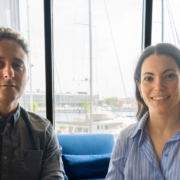
The Institute for Chemical Technology (ITQ CSIC-UPV) launch a start-up to boost the development of sustainable ingredients for detergents and cosmetics

The Research Institute for Chemical Technology (ITQ), a joint centre of the Spanish National Research Council (CSIC) and the Universitat Politècnica de València (UPV), is boosting the creation of the technology-based company Olesym Chemicals. This deep-tech start-up develops technology to manufacture ingredients for detergents and cosmetics using sustainable raw materials available in Europe. The technology is based on a process developed over more than ten years of research at ITQ and the Max Planck Institute (Germany), which enables renewable synthesis gas to be transformed into ingredients ready for incorporation into existing formulations for the manufacture of these products. It is currently in the transition phase to pilot scale.

Shampoos, conditioners, detergents, fabric softeners and fragrances contain molecules in their formulations that are unknown to consumers. Many of these ingredients are produced from palm oil or petrochemical derivatives imported from non-European countries. This dependence exposes European industry to price volatility, potential supply disruptions, new traceability requirements, and environmental impacts linked to deforestation, biodiversity loss, and high CO₂ emissions.

In contrast, the technology being developed by Olesym proposes to produce these molecules from European raw materials, thereby eliminating dependence on tropical raw materials such as palm oil or fossil-based raw materials such as petroleum. Furthermore, it would reduce the carbon footprint associated with the production of these ingredients by between 75 and 90 per cent, depending on the raw material – whether derived from agricultural biomass waste or forest management residues, or from CO₂ captured in industries such as cement and steel. These projections will need to be confirmed as the technology progresses towards industrial validation.

Cutting-edge technology

Olesym’s technology is the result of more than a decade of research at the Research Institute for Chemical Technology (ITQ), developed by the team led by Gonzalo Prieto, a CSIC researcher who heads the ITQ’s ‘Catalysis Engineering for Sustainability’ group. “The start-up received support from two prestigious programmes of excellence from the European Research Council (ERC), which took the technology through to laboratory validation and prepared it for scaling up to a pilot plant,” says Prieto, the company’s co-founder and Chief Scientific Officer (CSO).

Another distinctive feature of Olesym’s technology is that it does not rely on biotechnological routes or require the use of genetically modified microorganisms during production. Its thermocatalytic basis, which uses heat and a catalyst to drive the desired chemical reactions, is designed to achieve yields closer to those of conventional production routes, thereby promoting the development of renewable and sustainable alternatives that have the potential to be economically competitive.

Having validated the technology in the laboratory, Olesym is embarking on a new phase towards its validation at pilot plant scale. This will enable the company to verify the reproducibility and stability of the process on a larger scale and to produce samples for qualification. “The transition to pilot scale is a crucial stage, not only for validating the robustness of the technology, but also for producing the volumes required for the technical and commercial validation of our products with key clients, using real-world formulations,” says Ilaria Ceteroni, co-inventor of the technology, co-founder and Chief Technology Officer (CTO) of the company.

A recognised start-up

The spin-off was launched with the support of the venture builder Zubi Labs. In addition to Gonzalo Prieto and Ilaria Ceteroni, Dutch national Joost Korver has joined Olesym as CEO and co-founder to lead its industrial and commercial development, bringing with him twenty years’ experience in energy, sustainability and the growth of deep-tech companies. Renowned entrepreneur Iker Marcaide, co-founder and executive chairman of Zubi Group, has also joined the company’s board of directors. Olesym has received the EBTON-Converge Award 2025 for the best entrepreneurial project to emerge from the CSIC at a national level; the SPIN-UPV 2025 award as part of the UPV’s innovation competition; and a Santander X Award 2026, which recognises early-stage entrepreneurial projects in Spain.

Registration for the V Theoretical-Practical School on Fluorescence and Laser Flash Photolysis Techniques is now open.

13/12/2024

A new edition of the Theoretical-Practical School on Fluorescence and Laser Flash Photolysis Techniques, organised by the Lifelong Learning Centre of the Universitat Politècnica de València (UPV) and promoted by the Institute of Chemical Technology (ITQ), a joint research centre of the UPV and the Spanish National Research Council (CSIC), is back. This fifth edition will be held from 3 to 7 February 2025 at the facilities of the ITQ (UPV-CSIC). In addition, the registration period is now open until the 24 places offered are sold out.

The V Theoretical-Practical School on Fluorescence and Laser Flash Photolysis Techniques is aimed at PhD students and postdoctoral researchers who want to acquire theoretical and practical knowledge in a technique with great potential for the elucidation of reaction mechanisms.

The main objective of this school is to show the potential of fluorescence and laser flash photolysis techniques to investigate different reaction mechanisms, both photophysical and photochemical.

Maria Luisa Marín, researcher at the ITQ (UPV-CSIC), professor at the UPV and main organiser of this school stresses that this initiative – which began in 2019 and has been held with great success in four years – has established itself as the reference school at national level in this type of techniques. Due to the success of previous editions, the V Theoretical-Practical School on Fluorescence and Laser Flash Photolysis Techniques is offered in English, with the aim of reaching students from different countries.

The V Theoretical-Practical School on Fluorescence and Laser Flash Photolysis Techniques has a teaching staff of excellent scientific quality such as Dr. Francisco Boscá Mayans, Research Scientist at the ITQ (UPV-CSIC), Dr. Virginie Lhiaubet, PhD. Virginie Lhiaubet, Senior Scientist at ITQ (UPV-CSIC), Dr. Pedro E. Atienzar, Senior Scientist at ITQ (UPV-CSIC) and Dr. M. Luisa Marín García, researcher at ITQ (UPV-CSIC) and professor at UPV.

You can find out about the specific topics, the teaching methodology, the evaluation systems, as well as the procedure to follow to register for the V Theoretical-Practical School on Fluorescence and Laser Flash Photolysis Techniques at the following link: https://www.cfp.upv.es/formacion-permanente/curso/v-escuela-teorico-practica-tecnicas-fluorescencia-fotolisis-destello-laser_99360.html

Full programme

Sponsors:

ITQ (UPV-CSIC) – Blasing – MTB – Excelencia Severo Ochoa – GRUFO – Teknokroma – CIMSA.

“The ITQ (UPV-CSIC) hosts the second meeting of the DAM4CO2 Project”

The Instituto de Tecnología Química (UPV-CSIC) hosts the second meeting of the  DAM4CO2 (Double-Active Membranes for a sustainable CO2 cycle). This project, led by the  Consiglio Nazionale Delle Ricerche (Italia), is a collaborative multidisciplinary and international effort involving the participation of the Universidad Politécnica de Valencia (España), the Consorzio Interuniversitario Nazionale per la Sciencia e Tecnología dei Materiali (Italia), Swansea University and The University of Edinburg (Inglaterra), as well as the companiesPrimalchit (España) and Me-Sep (Polonia). Funding comes from the European Union.

During this meeting, progress toward the development of a laboratory-scale reactor integrating a photocatalyst on the external surface of a double-layer membrane was discussed. This innovative system allows for the separation of CO2 from combustion gases through the membrane, and thanks to the photocatalyst, CO2 reacts with Green Hydrogen to produce short-chain hydrocarbons.

This advancement promises to revolutionize how we approach CO2 utilization, offering the possibility of using it as a raw material for kerosene synthesis, which would significantly reduce our dependence on fossil fuels in sectors such as aviation. Shortly, we could envision traveling on planes powered by fuel synthesized from CO2, thanks to these emerging technologies.”

Eduardo Palomares explica en À Punt cómo funciona la contaminación durante los incendios

El pasado 26 de abril, en el programa Som de Casa de À Punt, Eduardo Palomares, vicedirector del ITQ (UPV-CSIC) y catedrático de la UPV, nos explicó cómo funciona la contaminación durante los incendios. Podéis ver toda la explicación a partir del minuto 32 del programa.

Programa completo disponible en:


Festival de Divulgación Científica Pint of Science Valencia 2024

Este mes de mayo celebraremos una nueva edición del Festival de Divulgación Científica Pint of Science Valencia 2024  #Pint24VLC #Pint24ES, con la participación del ITQ (UPV-CSIC), donde podremos acercarnos a la ciencia en diversos locales de la ciudad:

13 y 14 de mayo: George Best Club, c/ Alzira 12

13, 14 y 15: CIM Benimaclet, c/ Baró de San Petrillo 14

14 y 15: Ca Revolta, c/ Santa Teresa 10

Podéis encontrar los programas de cada día en los carteles y en su web https://pintofscience.es/events/valencia


El ITQ participará el día 14, a partir de las 19 h, en el CIM de Benimaclet con la charla “Amoniaco para cambiar el rumbo de la humanidad”, de Elena Vicente, y en Ca Revolta con “IA, ¿ciencia inteligente o artificial?”, de Fernando Ramiro.

¡Os esperamos!


 Primera fase de inscripción en el Máster de química Sostenible

El 3 de mayo finaliza el primer plazo de matrícula para el Máster de química sostenible del curso 2024/2025. ¿Te interesaría especializarte en procesos químicos eficientes y respetuosos con el Medio Ambiente? No pierdas la oportunidad de realizar este Máster en el ITQ (UPV-CSIC). Las plazas son limitadas, ¡te esperamos!

#QuímicaSostenible #Máster2024 #InscríbeteYA

Más información:

https://www.upv.es/noticias-upv/noticia-14493-preinscripcion-es.html

Entrevista a Gustavo Chacón, Investigador ComFuturo ITQ (UPV-CSIC), en el programa «A hombros de gigantes» de Radio Nacional de España, con Manuel Seara

Valencia, 22 de abril 2024. Gustavo Chacón, Investigador ComFuturo del ITQ, ha sido entrevistado por Manuel Seara en el programa de ciencia «A hombros de gigantes» de Radio Nacional de España. Gustavo compartió con la audiencia algunas ideas sobre el propósito de su proyecto SUNAPPLIGHT. Este proyecto pertenece a la convocatoria ComFuturo enmarcada en el programa COFUND de las Acciones Marie Skłodowska-Curie (MSCA) que cuenta, además, con el apoyo de CEPSA, y propone la creación de materiales híbridos nanoestructurados para la obtención de combustibles ecológicos a partir de agua y dióxido de carbono.

Podéis escuchar la entrevista completa en el siguiente link:

A hombros de gigantes – Programa de ciencia – RNE | RTVE Audio

Blanca Delgado recibe el premio al mejor Trabajo Fin de Máster por la cátedra de Transición Energética Genesal Energy de la Universidad de Santiago de Compostela

Valencia, 23 de abril 2024. Blanca Delgado Galicia, alumna del Máster de Química Sostenible del ITQ (UPV-CSIC) durante el curso académico 2022-2023, ha recibido el premio al mejor Trabajo Fin de Máster por la cátedra de Transición Energética Genesal Energy de la Universidad de Santiago de Compostela. Blanca realizó su TFM en el ITQ en el grupo de conversión y almacenamiento de energía, bajo la supervisión de Alfonso Carrillo y Andrés López y tutorizado por Eduardo Palomares. El tema del TFM es la funcionalización de electrodos por el método de exsolución para su uso como catalizadores electroquímicos, un tema novedoso y que ha generado interés entre el jurado que otorgaba el premio.

¡Enhorabuena Blanca!

Alexandra Velty, investigadora del Instituto de Tecnología Química (UPV-CSIC), campeona del Frontiers Planet Prize por España

Valencia, 22 de abril 2024. Alexandra Velty, investigadora del Instituto de Tecnología Química (ITQ), centro mixto de la Universitat Politècnica de València (UPV) y el Consejo Superior de Investigaciones Científicas (CSIC), ha sido elegida campeona en España de la segunda edición del premio internacional Frontiers Planet. Este galardón, impulsado por la Frontiers Research Foundation, reconoce el trabajo de científicas y científicos de todo el mundo que contribuyen a asegurar el futuro de planeta. Los ganadores y ganadoras nacionales se han dado a conocer hoy, en el marco del Día Mundial de la Tierra, que se celebra cada 22 de abril con el objetivo de concienciar sobre los problemas ambientales que afectan al planeta.

La Dra.Velty ha sido seleccionada por el jurado como campeona en España de estos prestigiosos premios, gracias al trabajo desarrollado junto con el profesor Avelino Corma en el Instituto de Tecnología Química, centrado en el diseño molecular de catalizadores sólidos y el análisis de los mecanismos de reacción. El artículo premiado destaca el potencial del uso de zeolitas y materiales mesoporosos ordenados para convertir el CO2 en combustibles y otros productos químicos esenciales para nuestra vida diaria.

Clave para la descarbonización del planeta

La investigación realizada por el grupo “Diseño molecular de catalizadores” no solo impulsa el desarrollo de procesos sostenibles basados en la conversión de materiales renovables como la biomasa y el dióxido de carbono, sino que desempeña un papel fundamental en la descarbonización global y el impulso de un desarrollo sostenible.

“La catálisis desempeña un papel crucial en nuestra vida cotidiana, y lo será más en un futuro, especialmente para la producción de energía, agua potable, alimentos y en la industria química. Esta investigación se enmarca en los principios de la química verde y la química circular”, destaca Alexandra Velty.

El trabajo premiado destaca el potencial de las zeolitas y de los materiales mesoporosos ordenados en la conversión del dióxido de carbono -el principal gas de efecto invernadero- en combustibles y productos químicos esenciales para nuestra vida cotidiana, tales como metano, metanol, gas de síntesis, así como la producción de intermedios para plásticos, fármacos, solventes y agroquímicos. “Representa una estrategia clave para la descarbonización del planeta”, señala Alexandra Velty, quien añade que “recibir este premio representa un gran reconocimiento a la labor realizada por nuestro grupo en el diseño molecular de catalizadores sólidos para el desarrollo de procesos químicos verdes y sostenibles”.

En su segunda edición, el Premio ha contado con la participación de 20 Academias de Ciencias y 475 destacadas universidades e instituciones de investigación de 43 países y un jurado independiente de 100 expertos en sostenibilidad, presidido por Johan Rockström, director del Potsdam Institute for Climate Impact Research (Alemania). En total, el jurado ha concedido 23 premios nacionales, de entre los que saldrán tres ganadores internacionales, que se darán a conocer el próximo mes 26 de junio, en una ceremonia que se celebrará en Villars-sur-Ollon (Suiza).

¡Enhorabuena por este logro!

Fuente

Luis Zurano Conches

Área de Comunicación

Unidad de Cultura Científica y de la Innovación (UCC+i)

Universitat Politècnica de València

El plazo de inscripción EARLY BIRD para EUROMXENE finaliza el 15 de mayo

El Congreso EUROMXENE2024 es el primer simposio en Europa dedicado exclusivamente a los MXenes y se llevará a cabo en la UPV. Este evento está liderado por la Dra. Ana Primo y el Prof. Hermenegildo García.

Desde su descubrimiento en 2011, los MXenes han transformado el panorama de la ciencia de materiales gracias a sus propiedades especiales y su versatilidad. Estos materiales ofrecen un potencial enorme en la energía, la electrónica y las aplicaciones medioambientales, entre otros campos.

EUROMXENE2024 reunirá a algunos de los principales expertos en el campo, quienes impartirán conferencias plenarias y keynotes sobre las investigaciones y desarrollos más recientes relacionados con los MXenes. Entre los ponentes se encuentran renombrados científicos como el Prof. Yury Gogotsi, el Prof. Husam Alshareef, el Prof. Jiaguo Yu, la Prof. Johanna Rosen y el Prof. Francesc Illas, entre otros; cada uno ofreciendo perspectivas únicas sobre el futuro y las aplicaciones de los MXenes.

El plazo de inscripción EARLY BIRD termina el 15 de mayo, aprovecha esta tarifa e inscríbete ya! #MXenes #Euromxene

https://euromxenecongress.com/registration
