The Instituto de Tecnología Química (UPV-CSIC) offers three positions for the Research Introduction Scholarships for University Students JAE Intro ICU 2023

The Becas JAE Intro ICU at ITQ allows students to immerse themselves in the world of research and develop their skills in critical areas of chemistry, chemical engineering, pharmacy, and biochemistry. The call has different profiles for the scholarships, each with different periods and durations, providing flexible options for participants.

The training plans offered are diverse and address relevant topics in the field of chemistry. The researchers responsible for each training plan are recognized experts in their respective areas, ensuring solid and valuable training for the scholarship recipients.

JAE Intro ICU 2023 Descriptive Data Sheet for ITQ Scholarships:

Contact Email: direccion.itq@csic.es
1. Number of scholarships: Up to 3
2. Period and duration of each scholarship: Defined in each training plan.

ITQ-01: 4 months, from 01/02/2024 to 31/05/2024

ITQ-02: 5 months, from 16/01/2024 to 15/06/2024

ITQ-03: 6 months, from 01/09/2023 to 28/02/2024

  1. Amount of each scholarship, monthly payments, and additional endowment: The total amount of each scholarship will depend on its duration; each scholarship’s monthly payments will be 600 euros, without additional endowment.
  2. The maximum weekly time commitment for scholarship recipients: 20 hours.
  3. Specific requirements for applicants, in addition to the general ones established in the call:
  4. Degree Branch: Completion of the degree in the academic year 2022/2023 or in a position to finish studies in Chemistry, Chemical Engineering, Pharmacy, or Biochemistry in t023/2024, and not possessing or legally eligible to obtain a Ph.D. degree.
  5. The average grade of the academic record of the degree: Demonstrate an average grade in the degree equal to or higher than 7 on a scale of 0-10.
  6. Official University Master’s Degree: In the case of having completed the degree, be enrolled in the current academic year or be admitted or enrolled in a University Master’s
  7. Degree in the field of sciences for the year 2023-2024. Offered training plans and responsible research personnel:
  8. Training Plan ITQ-01 Title: Control of Atmospheric Contaminants (VOCs) by Catalytic Methods. Responsible Researcher: Fernando Rey García and A. Eduardo Palomares Gimeno
  9. Training Plan ITQ-02 Title: Catalytic Process for the Production of Renewable Aromatics from Biogenic Sources. Responsible Researcher: Marcelo E. Domine Maccari
  10. Training Plan ITQ-03 Title: Synthesis and Photochemical Study of Molecules of Biological Interest. Responsible Researcher: Virginie Lhiaubet


Those interested in participating can find all the detailed information on the official website of the call at the following link: https://sede.csic.gob.es/icu2023. The contact email is direccion.itq@csic.es.

This is a unique opportunity for students with a passion for research who wish to take a step toward their professional future and contribute to the advancement of science.

Don’t miss the opportunity to apply for these scholarships and join a team of leading researchers at the Institute of Chemical Technology (UPV-CSIC)!


Dr. Marta Mon,  researcher at the Instituto de Tecnología Química (UPV-CSIC), has been awarded in the Innova category at the XV Premios SusChem Jóvenes Investigadores Químicos

Valencia, July 11 – Within the framework of the XV Premios SusChem, Jóvenes Investigadores Químicos, Dr. Marta Mon Conejero, a young researcher from the Instituto de Tecnología Química (UPV-CSIC), has been awarded the SusChem award in the Innova category for the Best Public-Private Collaboration Work. This work has been transferred to industry and is currently under commercial exploitation in collaboration with International Flavors & Fragrances Inc. (IFF), and has been published in NATURE COMMUNICATIONS (2022) https://doi.org/10.1038/s41467-022 -30320-9)

The purpose of the Premios SusChem Jóvenes Investigadores Químicos is to recognize, encourage and promote scientific and informative activity among young chemical researchers, as well as promote, develop, and disseminate the discipline of Chemistry, both in its pure science aspect and in that of its applications in Spain.

More information


Conference: «Identifying active sites responsible for selective upgrading of renewable biomass and waste plastics with reducible oxide supported catalysts», by Prof. Steven Crossley. Wednesday, July 12th, at 12:30 p.m

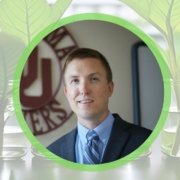
Next Wednesday, July 12th, at 12:30 p.m Prof. Steven Crossley, from the University of Oklahoma, will give a talk entitled “Identifying active sites responsible for selective upgrading of renewable biomass and waste plastics with reducible oxide supported catalysts». The talk will take place at the Salón de Actos ITQ.

“Access until full capacity”


Steven Crossley
Teigen Presidential Professor and Sam A. Wilson Professor
School of Sustainable Chemical, Biological, and Materials Engineering
University of Oklahoma, Norman, OK


ABSTRACT

The conversion of renewable biomass, waste plastic, natural gas, carbon dioxide, and many other important emerging streams to high value fuels and other products relies on highly active and stable catalysts capable of targeting specific bonds in a complex reaction environment. This presents a formidable challenge. Among the most promising families of catalysts to carry out this task, particularly for C-O bond activation, are metals supported on active reducible supports such as TiO2 or MoO3. These catalysts are also incredibly complex themselves. Because so many different surface features exist under reaction conditions, the underlying reason behind their promising behavior often remains elusive. In this presentation we discuss the various prospective active sites and introduce a unique approach to differentiate active sites by spatially separating them on conductive hydrogen highways. This allows us to differentiate active sites that are created on reducible oxide supports promoted by the metal via hydrogen spillover from unique active sites that are created around the perimeter of metal nanoparticles. We show several examples relevant to the production of high value products from biomass and waste plastics to illustrate how decoupling of active sites can help us to better understand and design improved catalysts in emerging areas.


BIOGRAPHY

Steven Crossley received his Ph.D. in chemical engineering with Daniel Resasco from the University of Oklahoma in 2009. From 2009-2011, he conducted research at ConocoPhillips, now Phillips 66, in the areas of fluid catalytic cracking and hydrocracking. In August 2011, Dr. Crossley joined the University of Oklahoma. His research involves evaluation of reaction mechanisms over zeolites and reducible oxides for biomass conversion, polymer upcycling, and CO2-free hydrogen generation. He is currently leading several large grants in the areas of waste polymer conversion and CO2-free hydrogen production. Dr. Crossley is the recipient the NSF CAREER award (2017) the inaugural Jischke prize (2023) and the OU VPRP award for Excellence in Research in Engineering and Applied Science (2023).  Dr. Crossley holds the Teigen Presidential Professorship and Sam A. Wilson professorship. He served as the CATL division Programming Chair for the 2019 and 2020 American Chemical Society fall national meetings and has served in multiple elected roles in the division since. He also served as president for the Great Plains Catalysis Society in 2022. He currently serves as associate director of the Institute for Resilient Environmental and Energy systems at OU.Dr. Crossley works to facilitate the success of Native American students in STEM fields and serves as faculty advisor for the University of Oklahoma’s award-winning American Indian Science and Engineering (AISES) chapter.

More Information

The Instituto de Tecnología Química (UPV-CSIC) participates in the European project SUPERVAL funded by the EU

Valencia, July 6, 2023 –  The prof. Hermenegildo García, member of the Photocatalysis Group at the Instituto de Tecnología Química (UPV-CSIC), participates in the European project SUPERVAL (SUstainable Photo-ElectRochemical VALorization of flue gases) funded by the European Union within the framework of the EIC Pathfinder Challenges 2022 call. This is an ambitious initiative aimed at converting, in a sustainable way, carbon and nitrogen emissions into valuable resources.

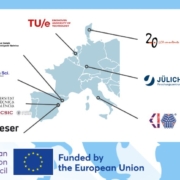
This three-year project, scheduled to start on the 1st of November 2023, brings together a consortium of eight organizations from Italy, Spain, Germany, Netherlands, and Denmark.

Limiting post-combustion emissions is one of the most urgent actions for environmental remediation. However, capture technologies face multiple challenges mostly due to the low concentration of pollutants, such as carbon dioxide (CO₂) or nitrogen oxides (NOₓ), making them highly inefficient. Additionally, even if successful, there are few plausible uses for the captured pollutants, apart from long-term geological storage.

In pursuing a more sustainable future, SUPERVAL’s primary objective is to address these challenges simultaneously, investigating the viability of a technology capable of transforming the treatment of post-combustion gases to unlock the potential of carbon and nitrogen components by separating and transforming them into valuable resources.

This is not the first project that the EU funds in that direction. SUPERVAL builds on the A-LEAF project, which is featured as a success story on the European Commission website (https://bit.ly/3fLTM7r). The A-LEAF project achieved the direct use of sunlight to transform waste carbon dioxide (CO₂) into valuable chemical fuels using a clean, fast, and cost-effective solution from low-cost, non-critical raw materials and processes.

The SUPERVAL technology will optimize and expand this strategy to the capture of the contaminants (CO₂ and NOₓ) from flue gas to convert them into added-value commodities for the chemical industry using exclusively renewable power sources from photovoltaics. All are implemented in a single, autonomous installation, to be validated in an industrial environment.

Like the previous A-LEAF project, SUPERVAL will be coordinated by the research institution Institut Catala d’Investigacio Química (ICIQ-CERCA) and will bring together a consortium of diverse organizations contributing their unique expertise and resources. The participating partners include Orchestra Scientific. Universitat Politècnica de València (Instituto de Tecnología Química UPV-CSIC) , Consorzio Interuniversitario Nazionale per la Scienza e Tecnologia dei Materiali – INSTM UdR Messina, CASPE Laboratory. Forschungszentrum Julich (who was also a consortium partner in the A-LEAF project), Technische Universiteit Eindhoven – TU/e. Vareser 96 and 2.-O LCA Consultants Aps.

More Information

Avelino Corma Receives European Inventor Award for Lifetime Achievement

Avelino Corma, Co-Founder of the Instituto de Tecnología Química (UPV-CSIC), has received the European Inventor Award for Lifetime Achievement from the European Patent Office (EPO). The prize was presented during a ceremony in Valencia, Spain, on July 4, 2023.

The European Inventor Award is one of Europe’s most prestigious innovation prizes and honors individuals and teams who have come up with solutions to some of the biggest challenges of our time, contributing to technical progress, social and sustainable development, and economic prosperity. The lifetime achievement prize, in particular, honors the long-term contribution of an individual European inventor whose dedication, tireless efforts, and patented landmark inventions have had a major impact on their technical field and society.

More information

The “MÁSTER UNIVERSITARIO EN QUÍMICA SOSTENIBLE” of the UPV is awarded the prize for “Mejor Máster Universitario”

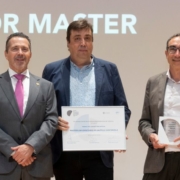
Valencia June 30, 2023 – Yesterday the award ceremony of the XXII Edición de los Premios del Consejo Social de la Universitat Politècnica de València took place in the Paraninfo de Rectorado de la UPV. During the event, the prize for “Mejor Máster Universitario” al MÁSTER UNIVERSITARIO EN QUÍMICA SOSTENIBLE, whose director is Eduardo Palomares Gimeno, Vice-director of the Instituto de Tecnología Química (UPV-CSIC).

More information of the MÁSTER UNIVERSITARIO EN QUÍMICA SOSTENIBLE, visit our Website https://itq.upv-csic.es/posgrado/master-universitario-en-quimica-sostenible

Si tienes o has tenido una relación profesional con el CSIC, esta iniciativa te interesa, hazte miembro de Alumni y disfruta de diversas ventajas 

El proyecto CSIC Alumni: https://alumni.csic.es/ pretende establecer un contacto continuo con aquellas personas que han tenido una relación profesional con el CSIC, ya sea previa a su jubilación como miembros del CSIC, o porque han disfrutado de una beca, contrato, estancia o periodo laboral concreto en algunos de los centros o unidades del Consejo.

La conexión para restablecer lazos puedan ser beneficiosos y gratificantes entre los/las miembros de Alumni, el CSIC y la sociedad a través del impulso de la generación, difusión y transferencia del conocimiento científico.

Formar parte de la comunidad Alumni te permitirá disfrutar de recursos y ventajas como descuentos en la Librería Científica del CSIC (libros y material de merchandising); gratuidad en las entradas de los museos y casas de la ciencia institucionales (Museo Nacional de Ciencias Naturales, Real Jardín Botánico, Museo Geominero, Casa de la Ciencia de Sevilla); acceso a los recursos digitales de nuestra red de bibiotecas (en el caso concreto del personal jubilado del CSIC) y a la agenda de actividades de eventos científico-culturales, etc.

Únete a esta red a través del siguiente enlace: https://alumni.csic.es/registro/.

El próximo 20 de julio el CSIC celebrará en el campus de Serrano en Madrid el evento anual CSIC Alumni, muy pronto daremos más información sobre el evento.

Antonio Chica, the vice-director of the ITQ (UPV-CSIC), participated in the event “Science For Policy” of the CSIC 

Antonio Chica, the vice-director of the Instituto de Tecnología Química UPV-CSIC, participated in the event “Science For Policy” of the CSIC 

The Consejo Superior de Investigaciones Científicas (CSIC) held the presentation of the report “Science For Policy” yesterday in Madrid. These reports, prepared by teams of CSIC researchers, aim to establish a bridge between research centers and political decision-makers and contribute to defining public policies based on scientific evidence.

More information(CSIC Webside)

Watch on YouTube

Conference: “Designing Oxide Catalysts with Machine Learning and Simulations”, by Prof Gómez-Bombarelli del MIT. June 29th at 12:00 pm

Prof. Gómez-Bombarelli of the Massachusetts Institute of Technology, an expert in Artificial Intelligence and Machine Learning, will give a talk entitled “Designing Oxide Catalysts with Machine Learning and Simulations” next Thursday, June 29th at 12:00 pm in the ITQ Assembly Hall.

More information

Avelino Corma, ITQ researcher, awarded the 2023 European Inventor Award for the Entire Professional Career

He is a pioneer in the field of catalysts. His legacy, however, is the Instituto de Tecnología Química (ITQ, UPV-CSIC) de València, an institution he co-founded to drive chemistry research in energy, sustainability, health and water.

Zeolites are catalysts used in chemical processes for a number of purposes, including improving the efficiency and environmental cleanliness of chemical reactions, in addition to breaking down crude oil into gasoline, diesel and other by-products. Zeolites are crystalline materials made up of silicon, aluminium and oxygen, whose porous structure allows them to act as sieves that trap small molecules, where a chemical reaction can then take place.

More information