Avelino Corma will be conferred Doctor Honoris Causa by the University of Salamanca 

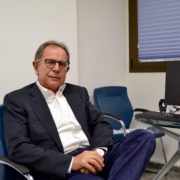
Avelino Corma will be conferred Doctor Honoris Causa by the University of Salamanca.The award will take place next March 10 at the Paraninfo in an act of recognition to the teaching and research staff.

More information

Avelino Corma: “ETH Zurich Chemical Engineering Medal” 2020

Since 2013, the Institute for Chemical and Bioengineering (ICB) annually awards the “ETH Zurich Chemical Engineering Medal” to an outstanding individual for his or her exceptional contributions in the broad field of Chemical Engineering.

The Institute for Chemical and Bioengineering , I CB ETH, has awarded the ETH Zurich 2020 Chemical Engineering Medal to Avelino Corma, a research professor at the Institute of Chemical Technology (ITQ, CSIC), for his extraordinary achievements in the field of catalysis.

 The award involves giving a conference at the Eidgenössische Technische Hochschule Zürich, with which a new academic semester will open. The event is scheduled between September 14 and October 2 of this year.

More information

ESR positions are open with ITQ researchers groups. The deadline is extended until January 31, 2020.

Graphene foam incorporating photoactive molecular complexes as photoelectrodes

The ERS will be trained in the preparation and characterization of doped graphenes and graphene-like photoanodes capable of absorbing visible light for oxidation reactions. Then, the immobilization of molecular catalysts supplied by NUIG, UCAm and JM, and the study of their photoelectrochemical properties as photoanodes.

In this project, the main objective is the preparation of nanostructured 3D graphene foams to anchor metal complexes of earth-abundant elements (Co, Fe, Mn, Ni) capable to generate oxygen and hydrogen peroxide from water, or promote organic transformations such as C=C double bond epoxidation and alcohol oxidation to aldehydes and ketones. The purpose of using hybrid 3D photoelectrodes is to obtain high surface area in a small footprint combining the electrical conductivity and striking optoelectronic properties of doped graphenes with high activity molecular catalysts.

More information

Ya está abierta la matrícula para la II Escuela de Fotólisis de Destello Láser

Duración de la Escuela:

Del 3/02/20 al 7/02/20

Preinscripción desde el 24/10/19
Matrícula desde el 20/12/19 21:30

Sede: Salón de actos del ITQ, sala de reuniones y laboratorios laser del Instituto Universitario Mixto de Tecnologia Química. ( Primera clase en Salón de actos). VALÈNCIA

Duración:

40 horas presenciales,
4 Créditos ECTS

Objetivos:

El objetivo principal de esta Escuela es mostrar el potencial de la técnica de fotólisis de destello láser para investigar diferentes mecanismos de reacción, tanto fotofísicos como fotoquímicos.

Objetivos específicos:
– Entender los experimentos basados en la técnica de fotólisis de destello láser.
– Discutir los mecanismos basados en experimentos de fotólisis de destello láser descritos en la literatura.
– Emplear la técnica de fotólisis de destello láser en investigación propia (Máster, Tesis Doctoral, etc) para elucidar mecanismos de reacción.


The TANDEng project, led by Gonzalo Prieto, a researcher ITQ, has been awarded by the Consolidator Grants program of the European Research Council (ERC)

The TANDEng project, led by Gonzalo Prieto, a researcher at the Institute of Chemical Technology (ITQ), has been awarded by the Consolidator Grants program of the European Research Council (ERC).

The prestigious ERC Consolidator Grants are part of the most competitive and prestigious program of support to individual researchers in the European Union. Its objective is to endorse young researchers, who have demonstrated excellence and a high degree of originality in their activities, to consolidate their teams and continue to develop their scientific career in Europe by implementing a project considered ambitious and highly innovative in any scientific discipline. Each awarded project receives funding for an amount of ca. 2 million euro.

The project’s goals: to decipher and control the cooperation of two catalysts in so-called tandem chemical processes.

TANDEng (Engineering catalyst interoperability in next-generation tandem reactions for intensified chemical processes), is going to extend until 2024 and has as the major purpose to fundamentally study, and on this basis to gain control over, the cooperation of couples of solid catalysts –materias which accelerate and steer chemical reactions to the products of interest – in so-called tandem catalytic processes, i.e. processes in which several chemical transformations take place sequentially in a single reactor.

As Prieto explains “tandem catalytic processes, in which two catalysts are integrated to direct sequential chemical reactions in a cooperative manner, are considered an stepping stone towards the intensification of processes in the chemical industry. Potentially, they can significantly reduce the energy needs and environmental footprint of existing processes, eliminating separation and purification stages and achieving higher yields to the desired products. But they can also enable other selective transformations which are out of reach at this point in time».

“Our objective”, explains the ITQ researcher, “is to understand and control spatial, thermal and chemical distances between the active centers of the catalysts integrated in tandem, to open the door to selective and highly intensified conversion processes that are not possible at present». As Prieto explains, the project aims to develop catalysts and processes for the valorization of unconventional carbon sources and therefore contribute towards a more sustainable chemical industry. “In order to convert carbon resources alternative to petroleum, such as unconventional natural gas, carbon dioxide waste streams or biomass-derived gases into products of interest, a complete re-design of current chemical processes is necessary, including their intensification and miniaturization to make them compatible with the small scale and spatial delocalization of these new raw materials. Contributing to this transition is the ultimate goal of the project».

“The project is inspired by preliminary results obtained during my time as a researcher at the Max Planck Institute for Kohlenforschung in Germany, and after the recent relocation of the group to the ITQ in Valencia, it is going to mean a decisive endorsement to consolidate and expand our activities,” he concludes.


Avelino Corma, awarded with the Heinz Heinemann Award of the International Asociation of Catalysis Societies (IACS)

Avelino Corma, ITQ researcher, awarded with the Heinz Heinemann Award of the International Asociation of Catalysis Societies (IACS). The award recognizes the work of people or groups that have made significant contributions in the science and technology of catalysis. On this occasion, the prize has been awarded “for its innovative achievements in the transition from the molecular design of solid catalysts to its industrial applications”.


eCOCO2 presents its first video so you know the main objectives of the project

We want to help meet the world’s demand for energy closing the loop, with a revolutionary approach to use the CO2 coming from industrial sources as an alternative source of energy.

We present our project in the following video:


Six UPV researchers (two from ITQ) are among the most influential in the world

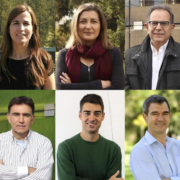
Researchers Avelino Corma (ITQ), Amparo Chiralt, Hermenegildo García (ITQ), María Vargas, Luis Guanter and Pedro Luis Rodríguez, who develop their scientific work at the Polytechnic University of Valencia (UPV), are among the most influential scientists of the world. The six researchers have been included in the Highly Cited Researchers (HCR) 2019 list, prepared by Clarivate Analytics and which recognizes the most cited researchers internationally.

Read more

iCAREPLAST, a project in which ITQ researchers participate, celebrates the first year of implementation

Since October 2018, the interdisciplinary consortium behind the iCAREPLAST project has been working hard to deliver its first results and lay the ground for successful future activities. The iCAREPLAST Newsletter has for objective to provide you with the latest updates on the project progress, as well as an overview of the ongoing activities.

First newsletter iCAREPLAST

Second newsletter iCAREPLAST

The CSIC participates in the Science Week, an annual activity celebrated in the month of November in Spain

The Week of Science and Technology is the most important initiative of scientific dissemination in many autonomous communities. Since 2001 it is organized with national character with the objectives of bringing science to the public of all ages, stimulating the interest for scientific knowledge and the participation in scientific activities in museums, universities, research centers, technology parks, etc.

More information