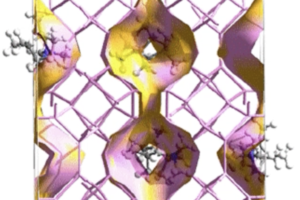
The ITQ Catalysis for Sustainable Organic Reactions group, in collaboration with other groups, have published in the journal Chemical Science a study on the use of platinum clusters as catalysts for hydrosilylation reactions.
The ITQ Catalysis for Sustainable Organic Reactions group, in collaboration with the Faculty of Chemistry of the Jagiellonian University (Krakow, Poland), the Institute of Molecular Science (ICMol) of the University of Valencia, and the Molecular Recognition and Encapsulation Group (REM) of the Catholic University of Murcia (UCAM), have published in the journal Chemical Science a study on the use of platinum clusters as catalysts for hydrosilylation reactions.
The Pt–catalyzed hydrosilylation reaction is a fundamental transformation in industrial and academic chemistry to finally give silicones, performed in solution without extracting the Pt atoms, thus contaminating with Pt many daily objects. Our work shows that the reaction proceeds not with the original Pt catalyst added but with Pt–Si–H clusters of 3–5 atoms (metal(oid) association) formed in-situ, in part–per–million amounts (ppm). This metal(oid) association enables the design of new solid catalysts, which paves the way for a more environmentally–benign application of this industrial reaction.