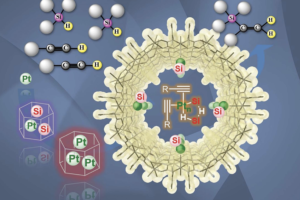
A new publication in J. Phys. Chem. Lett. describes the work by ITQ researchers
It is known that the synthesis of zeolites can become more selective by introducing organic molecules (named Structure Directing Agents, SDA) in the gel. If SDAs match the zeolite micropore, then the short-range energy stabilization (van der Waals) makes the system more stable. From a few decades, the design of new SDAs has led to notable breakthroughs allowing the synthesis of many new and different zeolites. Recently, the combination of computational methods and algorithms for the treatment of big data as well as the advent of artificial intelligence is contributing to taking the state of the art a step forward.
A new publication in J. Phys. Chem. Lett. describes the work by ITQ researchers in this sense. The new algorithm includes the calculation of three structural parameters for each SDA, out of more than 500 chosen from a database. These three parameters can be confronted with other parameters related to micropore size and a shortlist of candidate SDAs for the synthesis of the target zeolite is proposed by the software. ITE has been the zeolite chosen to illustrate and benchmark the power of this approach, which can be readily used for any cage-containing zeolite. J. Phys. Chem. Lett has published a ‘LiveSlides’ as supporting information of this publication.