Change in the presidency of SOMMa: Maria A. Blasco substitutes Luis Serrano

  • During the three years that Luis Serrano has been president of SOMMa, together with vice presidents Maria A. Blasco and Mª José Sanz, the alliance has deployed an intense activity in science policy, establishing bridges with numerous entities of the political and scientific world.
  • “Our country has research institutes and researchers that are among the best of the word, this needs to be valued and boosted by our governors, not only financing science at a level suited to an ambitious country but also easing the excessive administrative burden that thwarts the retention and contracting of international talent”, highlights the new president.
  • Serrano steps down from the presidency after intensive efforts put in science policy, calling once more for R+D+I to become a priority for the country.

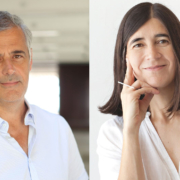
16 December 2020. After three years as president of the Severo Ochoa – María de Maeztu Alliance, Luis Serrano, director of the Centre for Genomic Regulation (CRG) ends his term and steps down from the presidency. The new president will be Maria Blasco, director of the Spanish National Cancer Research Centre (CNIO), and until now first vice president of SOMMa. The new president has expressed her will to “carry on working for the recognition of Spanish science as one of the political and economic priorities of this country”. Blasco will be accompanied by SOMMa vice presidents Mª José Sanz, director of the Basque Centre for Climate Change (BC3), and Antonio Molina, director of the Centre for Plant Biotechnology and Genomics (CBGP-UPM-INIA).

The Severo Ochoa and María de Maeztu Alliance, SOMMa, gathers over 50 top Spanish research institutions with over 8,500 researchers, was launched officially from the CRG on October the 18th, 2017, with the support of then-Secretary of State of Research of the Ministry of Economy, Carmen Vela, as an initiative to visualize the Spanish science with the Severo Ochoa and María de Maeztu mentions of excellence of the Spanish State Plan for R+D+I.

The Severo Ochoa and María de Maeztu mentions are the highest institutional recognition to scientific research in Spain. Their awardees, selected by an international evaluation committee, cover practically all areas of knowledge, from physics and mathematics to environmental sciences and biomedicine, as well as humanities. A reflection of the excellence of SOMMa centres and units is the fact that they are also those institutions that occupy the first positions in international scientific rankings.

The law for public contracts of 2017, Ley 9/2017, raised the alarms of the Spanish research community. This marked the start of an intensive task in a scientific policy of SOMMa, which managed to make of the alliance an actor to be taken into account in the Spanish scientific scene. The exchanges between the directive teams of alliance members provided ample perspective and new connections with numerous scientific societies, associations of researchers and companies active in R+D+I. With them, the alliance has launched and participated in numerous actions and positioned itself publicly in defence of science.

More information

Investigadores del ITQ participan en el proyecto de desarrollo de nuevos materiales y recubrimientos sostenibles que financia la AVI

La Agència Valenciana de la Innovació (AVI) financia el desarrollo de nuevos materiales y recubrimientos sostenibles con el objetivo de reducir el riesgo de transmisión de infecciones por microorganismos en los centros sanitarios.

Se trata de un proyecto estratégico en el que colaboran el Instituto Tecnológico del Plástico, Aimplas; el Instituto de Tecnología de Materiales y el Instituto de Tecnología Química de la Universitat Politècnica de València (ITM-UPV e ITQ UPV-CSIC), la empresa Lamberti, Industrias Tayg, así como el Instituto de Investigación Sanitaria La Fe (IIS La Fe).

Esta iniciativa, que ha recibido el respaldo de la AVI en su última convocatoria de ayudas en concurrencia competitiva, hace uso de la nanotecnología para hacer frente a este desafío y además propone soluciones innovadoras fabricadas con materias primas orgánicas de origen renovable, más sostenibles que las alternativas presentes en el mercado, caracterizadas por su naturaleza metálica.

El objetivo MOBACT, como se ha bautizado al proyecto, es desarrollar una tecnología capaz de reducir el riesgo de colonización de las superficies sanitarias próximas a los pacientes de forma que se logre reducir hasta en un tercio la carga de estas enfermedades que suponen un riesgo médico y un importante gasto público.

Las investigaciones que desarrollan los socios de esta iniciativa van encaminadas a obtener nuevos materiales basados en sustancias activas capaces de destruir las bacterias, o al menos impedir su reproducción, en distintas aplicaciones a fin de evitar la acumulación y proliferación de microorganismos.

Por ello, los nuevos compuestos antimicrobianos se van a incluir en matrices poliméricas para hacer posible su utilización tanto en forma de barnices en base agua para el recubrimiento de mobiliario y superficies, como en masa para la fabricación de productos inyectados.

Ir a noticia


Miembros del ITQ participan en el desarrollo de dispositivos de alta frecuencia para comunicaciones inalámbricas

Un equipo multidisciplinar de la UPV y el CSIC, compuesto por miembros del Instituto de Telecomunicaciones y Aplicaciones Multimedia (ITEAM), del Instituto de Tecnología Química (ITQ) y de la Escuela Politécnica Superior de Alcoy (EPSA) está desarrollando un nuevo método de fabricación mediante impresión 3D, metalización e integración de dispositivos de alta frecuencia para su uso en sistemas de comunicaciones.

Más información

Investigadores del ITQ entre los más influyentes del mundo según refrenda la Highly Cited Researchers (HCR) 2020

Los investigadores del Instituto de Tecnología Química y  la Universitat Politècnica de València (UPV),  Avelino Corma, Amparo Chiralt, Hermenegildo García, Luis Guanter y Pedro Luis Rodríguez figuran entre los científicos más influyentes de todo el mundo, según refrenda la Highly Cited Researchers (HCR) 2020, una lista elaborada por Clarivate Analytics y que reconoce a los investigadores más citados a nivel internacional.

Leer noticia UPV

Leer noticia Europapress


Professor Avelino Corma, ITQ researcher among the 103 most cited Spanish researchers in the world

Spain appears at number 10 in the Highly Cited Researchers list produced annually by Clarivate Plc.

A total of 103 researchers associated with Spanish institutions have entered this year on the Highly Cited Researchers list produced annually by Clarivate Plc, a ranking that identifies researchers who have demonstrated significant influence in their field or fields of research through the publication of multiple highly cited articles over the last decade.

Read news

The 4th Newsletter of the Horizon 2020 project iCAREPLAST , coordinated by ITQ, is already available online

The 4th Newsletter of the Horizon 2020 project iCAREPLAST , coordinated by ITQ, is already available online.

Topics featured in this number include:

  • What is KERIONICS and their rol in the project.
  • iCAREPLAST joined Plastics Circularity Multiplier (PCM) event.
  • Dissemination activities and upcoming events.

Download the Newsletter here (a click on the image is also an option to download the Newsletter in pdf).

This Thursday, November 19, the ITQ participates together with other centers of research excellence, in a webinar organized by La Agència Valenciana de Innovació (AVI)

Date: Thursday, November 19, 2020. 19 hours.

YouTube: https://youtu.be/ALFAC9ZwWJw

The cycle of conferences on molecular sieves begins on November 17, with the participation of ITQ researchers

On November 17 begins the cycle of conferences on molecular sieves organized by Sibele, Unv. Rio Grande do Norte, Brazil.

Antonio Chica, ITQ researcher, will give a conference on November 20 on Catalysts and Energy.

Registration is free:

http://www.lmn.ufc.br/ciclo2020.html

Sir John Meurig Thomas: Welsh scientist dies aged 87

Read news

The second number of the e-newsletter of the Horizon 2020 project REDIFUEL, with participation of ITQ researchers, is now online

Topics featured in this number include:

  • Analysis of the average age of the EU vehicle fleet.
  • Results on pilot tests for biosyngas conversion to a the drop-in oxygenated diesel blend with ad hoc developed catalysts.
  • Effects of fuel formulation on mixture formation & engine performance.
  • Highlights from the European Commission Midterm project review.

          Direct link to the REDIFUEL Newsletter

          UNR LinkedIn post

          UNR Twitter post